
Set the stage before the cats meet
A calm introduction begins before either cat gets a good look at the other. Give your newcomer time to settle, and make sure your resident cat still has familiar places and routines. The aim isn’t instant friendship; it’s a home where neither cat feels they have to defend every corner.
Give the newcomer a private home base
Set up a quiet room where the new cat can eat, drink, sleep, use a litter box and hide without being disturbed. A spare bedroom works well, but any secure space with room to move can do the job. Visit often and let the cat choose when to approach you; hiding for a while is a perfectly reasonable response to a very big change.
Stock separate resources to prevent competition
Cats may be more comfortable when essential resources aren’t all crowded into one contested spot. Before introductions begin, check that each cat can reach what they need without having to pass the other. These basics are a useful place to start:
- Separate food and water stations
- Litter boxes in accessible, distinct locations
- Beds, hiding places and scratching surfaces
- Toys and quiet resting spots
Having options can make the home feel less like a shared waiting room. Keep an eye on how each cat uses the space, and adjust if one starts guarding a route or resource.
Check health and temperament before introductions
Think about each cat as an individual, not as a character in a story where every new roommate becomes a best friend. If either cat seems unwell or has a history of strong fear or aggression around other animals, ask a veterinarian or qualified behaviour professional for guidance before you begin. A little planning can help you choose a pace that feels manageable for both.
Make the resident cat’s routine feel reassuringly familiar
A newcomer can turn a familiar home into a surprisingly busy place. Keep your resident cat’s usual meals, play and rest as consistent as you can, and make sure they still get time with you. Those familiar moments offer a steady bit of normal while the household adjusts.
Start with scent, not face time
To a cat, a new housemate’s scent can be news long before the newcomer appears in the doorway. Let each cat notice the other indirectly while they remain in separate spaces. This gradual first step gives you a chance to see how they respond without adding the pressure of a face-to-face encounter.
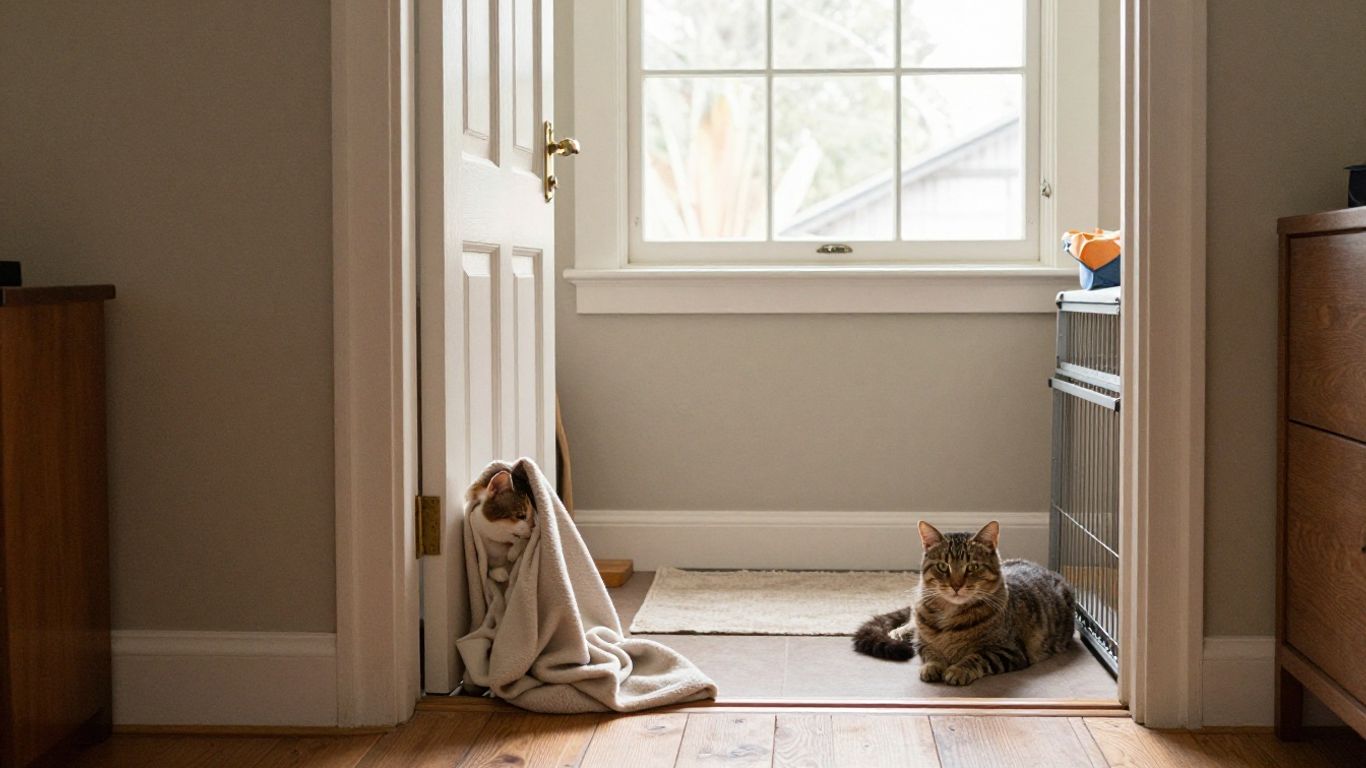
Swap bedding and soft items between spaces
Place a blanket or soft item used by one cat in the other cat’s area, and let them investigate at their own pace. Don’t push it towards them or hold it under their nose; curiosity is more useful when it’s voluntary. If a cat sniffs and walks away, that can be a perfectly uneventful start.
Trade room access while keeping the cats apart
Once both cats are comfortable in their own spaces, you can let each explore the other’s room at a different time. Keep the cats securely separated during the swap, so they can learn about the other’s surroundings without an unexpected meeting. Return each cat to their usual area before opening any route between them.
Pair unfamiliar scents with treats or play
Try offering a favourite treat or a little play while the other cat’s scent is nearby, as long as both cats remain relaxed. Keep the activity far enough from the scented item that neither cat feels cornered by it. If they’re too distracted to eat or play, give them more space and try again another time.
Wait for calm reactions before moving forward
Sniffing briefly, ignoring the item or choosing to nap nearby may all be signs that the scent is becoming less remarkable. Watch the whole cat, not just the nose: a stiff posture or an attempt to avoid the area suggests they need more time. Progress is measured by comfort, not by how quickly you can move to the next step.
Let them see each other without sharing space
When scent swapping is no longer stirring up much concern, you can add a short visual introduction. Keep a secure barrier between the cats so they can see one another without having access to each other’s space. This stage is less about making them interact and more about letting a new sight become ordinary.
Use a secure barrier for brief visual introductions
Choose a barrier that cannot be pushed aside or climbed through, and check that both cats are safely contained before beginning. A secure screen or gate may work if it prevents either cat from slipping through; supervise closely throughout. If you’re unsure the barrier will hold, stick with a closed door and continue with scent-based steps instead.
Keep the first view short and pleasantly uneventful
Make the first glimpse brief, then calmly end it while both cats are still coping. You can offer a treat or play at a comfortable distance, but don’t insist that they approach the barrier. A quiet glance followed by a retreat to more interesting business is a fine result.
Watch for relaxed body language on both sides
Look for loose posture, ordinary sniffing and the ability to turn away or focus on something else. Cats don’t need to greet each other to show they can manage the moment. If both can see the other and then return to resting, eating or exploring, the exposure may be feeling less intense.
Add distance or block the view if tension rises
If either cat becomes rigid, crouches low, growls or repeatedly tries to reach the other, increase the distance or cover the barrier. Don’t scold them for reacting; that adds pressure to an already difficult moment. End the viewing session calmly, then try again later with less exposure.
Make first meetings short and supervised
A shared room is a bigger step than seeing each other through a barrier. Wait until both cats are generally calm during visual introductions, then plan a brief, closely supervised meeting. Keep your expectations modest: peaceful coexistence for a few minutes is plenty to celebrate, even if nobody makes a new best friend.
Choose a roomy, low-pressure meeting spot
Pick a space where the cats can move around without being funnelled into a narrow passage or crowded into a corner. Remove anything that could make it hard to supervise, and avoid beginning near a favourite bed or food bowl. The more room each cat has, the less likely the meeting will feel like a forced negotiation.
Give each cat an easy escape route
Make sure both cats can move away, retreat or find a familiar hiding place without crossing paths. Don’t hold either cat in your arms or block their exit to encourage a greeting. Choosing to leave is useful information, not bad manners.
Use treats or toys to build positive associations
Keep treats or toys available, but let each cat decide whether to engage. Start with enough distance that both can focus on the activity rather than fixating on each other. If one cat won’t take a treat or play, don’t wave it closer; create more space and let the moment settle.
End the session before either cat gets overwhelmed
Finish while the cats are still relatively settled instead of waiting for a hiss or chase to announce that the meeting is over. Guide them back to their separate areas calmly, then give them a chance to rest. Short, uneventful sessions are easier to repeat than one long encounter that leaves everyone on edge.
Read the signals and adjust the pace
Cats communicate through a whole collection of small signals, and no single gesture tells the entire story. Notice what each cat does before, during and after an encounter. If they’re finding it hard to settle afterwards, the best next move is often a smaller step, not a more ambitious one.
Spot signs of curiosity versus mounting stress
Curiosity may look like a brief sniff, a relaxed look or an approach followed by an easy turn away. Stress can show up as a tense body, flattened ears, a tucked posture, persistent staring or repeated attempts to hide. Consider the context and the pattern; a cat that briefly sniffs and strolls off is responding differently from one that stays rigid and watchful.
Tell normal hissing from escalating conflict
A hiss can be a cat’s way of asking for space, and by itself it doesn’t mean the introduction has failed. Pay attention to what follows: a cat that backs away may be communicating a boundary, while repeated chasing, lunging or attempts to corner the other cat call for a pause. Your job isn’t to make them stay together, but to keep the interaction safe and manageable.
Repeat an earlier step when progress stalls
If a meeting gets tense, return to a step the cats handled more comfortably, such as scent swapping or seeing one another through a barrier. Make the next attempt shorter, increase the distance or reduce how much they can see. Going backwards is just adjusting the route; it isn’t proof that the cats can never share a home.
Let the more cautious cat set the timetable
One cat may be ready to explore while the other still prefers a closed door. Let the more hesitant cat’s comfort guide when you increase contact, rather than asking them to catch up on your schedule. Patience can feel slow in the moment, but it gives both cats room to feel safe.
Handle setbacks without declaring a feline feud
A tense encounter can happen even when you’ve been careful. It doesn’t automatically mean the cats are destined to dislike each other, but it does tell you that the current step may be too much. Focus on creating distance and bringing back the calmer parts of the routine before trying again.
Separate cats safely after a tense encounter
If the cats are escalating, don’t reach between them or try to pick up an agitated cat. Use a solid barrier, such as a door, to separate them if you can do so safely, then give each cat space to settle in a separate area. Once they’re apart, let the room become quiet before considering what to change next.
Reduce pressure and rebuild positive associations
Return to brief, low-pressure steps that have gone well before, and avoid arranging another close meeting straight away. You might resume scent swapping or short views through a secure barrier, keeping enough distance for both cats to stay composed. A calmer repetition is more helpful than trying to prove that the last encounter was a one-off.
Protect food, litter boxes, resting spots, and attention
Check that neither cat is blocking the other from everyday resources or places to rest. Offer separate routes and stations, and give each cat some individual attention so they don’t have to compete for access to you. A home can be shared without every good spot, snack or lap becoming a group activity.
Seek professional help for persistent aggression or fear
If either cat remains highly fearful, repeatedly tries to attack, or can’t settle after you reduce the pressure, ask a veterinarian or qualified cat behaviour professional for help. They can consider the situation and suggest a plan suited to your household. You don’t have to wait for things to become unmanageable before asking for guidance.
Conclusion
Introducing cats slowly is less about staging a perfect first greeting and more about giving each cat enough time, space and choice to feel safe. Move from separate spaces to scent, then sight and supervised meetings, repeating earlier steps whenever needed. A peaceful home may include friendship, polite distance or simply two cats who know how to share the space without drama.
Frequently Asked Questions
How long does it take to introduce two cats?
There’s no fixed timetable. Some cats become comfortable with gradual steps sooner than others, so let their behaviour guide the pace and stay at each stage until both seem relaxed.
Should I let the cats meet as soon as I bring one home?
It’s usually better to give the newcomer a separate home base first. This lets them adjust to the new environment while both cats become familiar with one another’s scent before meeting face to face.
Is hissing during an introduction normal?
A brief hiss can be a request for space. Give the cats room and watch what happens next; repeated chasing, lunging or cornering means you should separate them and reduce the pressure.
What if one cat hides during the introduction?
Don’t force them to come out or approach the other cat. Give them a safe place to retreat and continue only when they’re comfortable with the current step.
Can I leave the cats alone together after one calm meeting?
One calm meeting isn’t enough to know how they’ll behave without supervision. Keep interactions supervised until both cats have shown they can remain settled together over time.
What should I do if the first meeting goes badly?
Separate the cats safely, allow them to settle in their own spaces and return to an earlier step they handled calmly. A setback is a reason to slow down, not to force another meeting.
Do cats have to become friends to live together?
No. Some cats become close, while others are content to share a home with comfortable distance between them. The practical goal is that both can rest, move around and access their resources without fear or conflict.