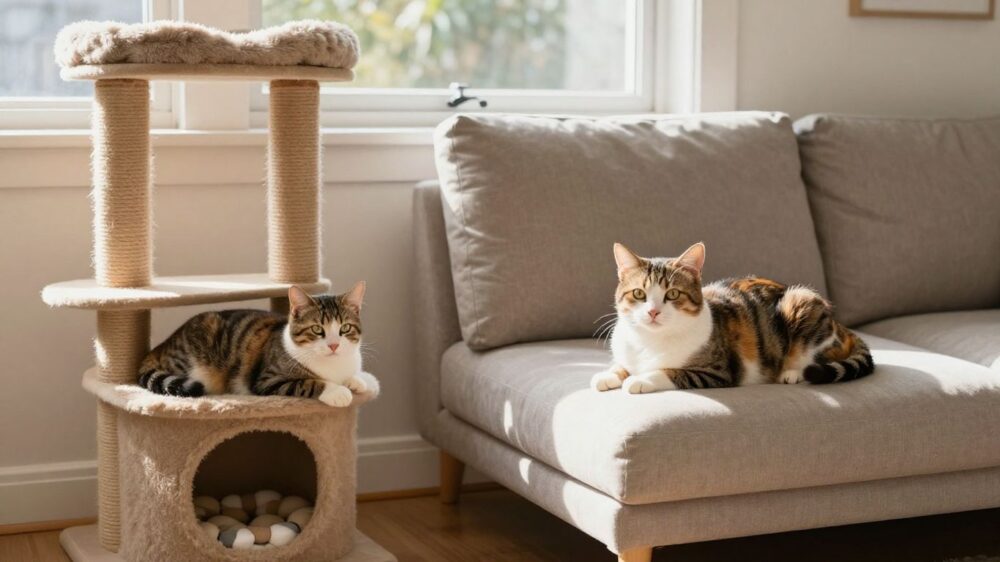
Why introducing cats slowly is worth the patience
When you bring a new cat home, you are not simply adding another furry flatmate. You are changing the scent map, routines, and territorial assumptions of the cat who already lives there. Introducing cats slowly gives both animals time to gather information without feeling ambushed. It may seem fussy, but a little ceremony now can prevent a great deal of hissing later.
How cats interpret territory, scent, and surprise
Your resident cat knows the home through smells, pathways, resting places, and daily patterns. A newcomer arrives carrying unfamiliar information, then promptly occupies the most interesting room in the house. That can feel less like a social visit and more like someone moving into your kitchen without asking.
Scent does much of the early conversational work. Before cats need to look at each other, they can learn that another animal exists nearby and that this fact does not automatically predict danger.
The difference between curiosity, caution, and real aggression
Curiosity may look like sniffing, watching from a distance, or sitting near a closed door. Caution often includes retreating, hiding, low growls, or a single hiss when the other cat gets too close. These signals are information, not a moral judgement; your cat is saying, “That is enough for now.”
Real aggression is more intense and sustained. Repeated lunging, chasing, biting, fur flying, or one cat being unable to escape calls for immediate separation and a slower plan.
Why “let them work it out” is usually terrible advice
Cats do not need to settle a roommate dispute through a tiny wrestling tournament. A frightening first encounter can teach one or both cats that the other is dangerous, making every later meeting harder. If tension rises, calmly create distance rather than shouting, grabbing, or forcing contact.
Your job is not to make them adore each other on schedule. It is to keep encounters safe enough that tolerance, and perhaps friendship, has room to grow.
Setting realistic expectations for the timeline
Some cats relax around a newcomer in days; others need weeks or longer. The useful measure is not the calendar but the behaviour: both cats should be eating, resting, using their resources, and recovering from brief surprises. Slow is a strategy, not a failure.
Move forward only when the current stage feels ordinary. If either cat is persistently distressed, return to the last stage that felt comfortable and stay there a while.
Preparing your home before the new cat arrives
A calm introduction begins before the carrier crosses the threshold. Set up the new cat’s area, inspect the rest of the home for bottlenecks, and think about where each cat can retreat. You are trying to create options, because cats cope better when they are not cornered.
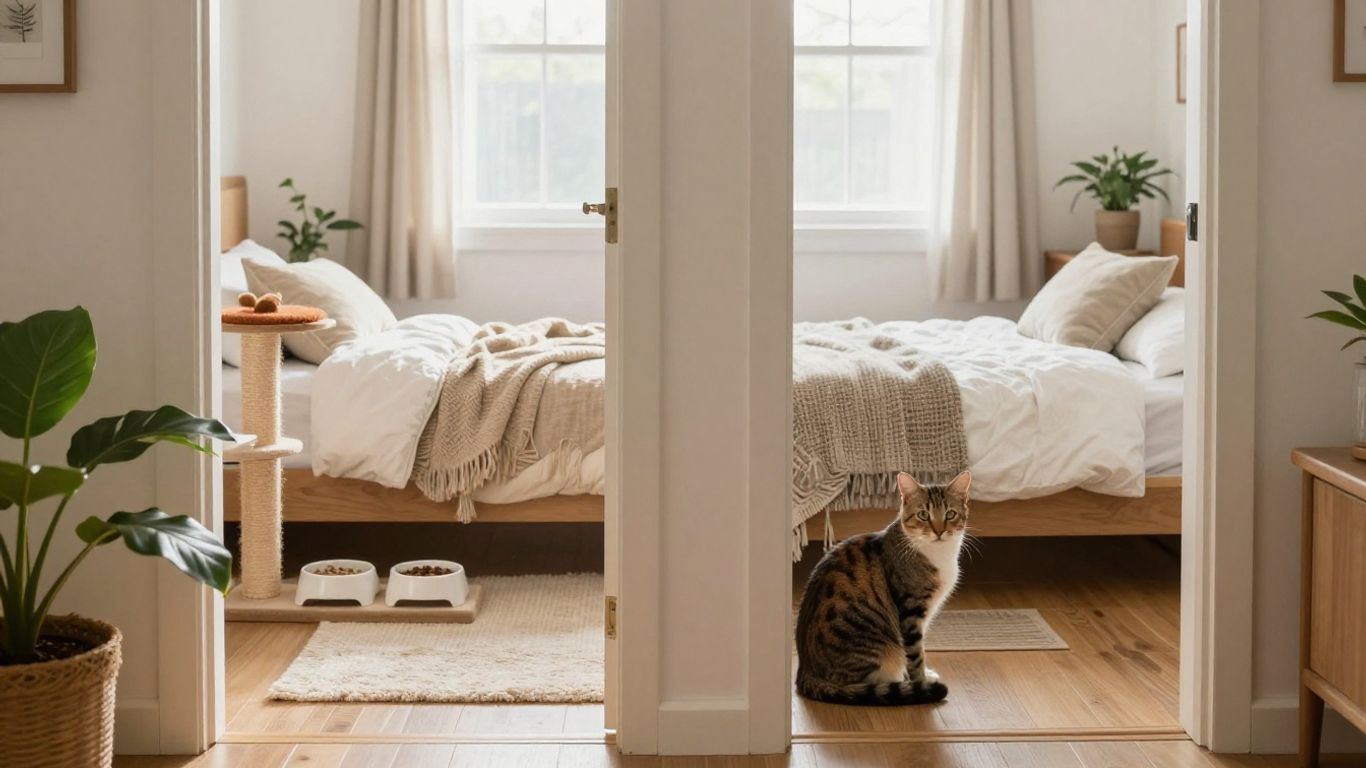
Creating a private safe room
Choose a quiet room with a closing door for the new cat’s first base. Put in bedding, food, water, a litter tray, a scratching surface, and a couple of hiding choices. Spend time there without demanding interaction; reading aloud can be less intimidating than looming over a nervous cat with a camera phone.
The safe room is not a punishment cell. It is a manageable territory where the newcomer can eat, sleep, and learn your household sounds before the entire home becomes available.
Providing duplicate essentials to prevent resource squabbles
Give each cat separate access to the basics, rather than expecting them to share everything immediately. Keep food and water away from litter trays, and place resources where a cat cannot easily be blocked by the other.
Think about the whole day, not only mealtimes. Separate resting spots, scratching areas, and human attention can reduce the sense that every good thing has become a competition.
Choosing hiding spots, perches, and escape routes
A cat who can retreat is less likely to defend itself dramatically. Offer covered beds, boxes with more than one opening where practical, elevated resting places, and clear routes away from busy areas. Block dangerous gaps, but do not remove every hiding option in the name of visibility.
You want hiding to be safe and temporary, not impossible. A perch or open doorway can give a worried cat a way to observe without being forced into the middle of the action.
Reducing stress with predictable routines
Keep feeding, play, cleaning, and quiet time reasonably consistent. Predictability gives both cats something familiar to lean on while the household changes. It also makes it easier for you to notice a meaningful change in appetite, toileting, or behaviour.
Introduce household members to the plan before the new cat arrives. If one person opens the door while another accidentally stages a surprise meeting, your carefully prepared introduction can become a farce with whiskers.
Starting with scent before face-to-face meetings
Scent work lets each cat investigate the other without the pressure of eye contact. You can begin while the new cat remains in the safe room, keeping exchanges gentle and optional. The aim is familiarity, not forcing either cat to cuddle a towel like a hostage negotiator.
Swapping bedding without staging a fur-based hostage exchange
Place a used blanket or bed from one cat near the other’s space, then leave it there without pushing it under a nose. If either cat avoids it, move it farther away and try again later. You can also swap small items between rooms so the smell becomes part of the background rather than a dramatic event.
Watch what happens next. A brief sniff followed by normal eating or resting is useful progress; staring, growling, or refusing to enter the room means the scent is currently too much.
Using meals to build positive associations
Offer meals at a comfortable distance from the closed door between the cats. At first, that may mean both bowls are well back from the door. As each cat remains relaxed, you can gradually place the bowls closer over separate meals.
Food should help the cats feel safe, not trap them beside an alarming smell. If one stops eating, increase the distance and make the next attempt easier.
Introducing scents through doors, toys, and cheek rubs
A soft cloth gently rubbed around a cat’s cheeks can carry familiar facial scent, but only do this if the cat welcomes the handling. You can leave the cloth near the other cat’s area, exchange toys, or allow investigation beneath the door. Keep sessions low-key and stop before either cat becomes upset.
Avoid mixing every object at once. One small scent change is enough for a day; cats do not award bonus points for an ambitious laundry programme.
Knowing when both cats are ready for the next step
Readiness looks like ordinary behaviour around the scent: eating, playing, grooming, or resting without prolonged hissing and fixation. Both cats should be able to disengage and return to their own activities. One confident cat is not enough if the other is still hiding all day.
When the scent stage is consistently uneventful, you can begin positive activities on opposite sides of the closed door.
Building positive connections through a closed door
The closed door remains a useful safety line while the cats learn that the other’s presence predicts ordinary, pleasant things. Keep sessions short enough to finish well. A door is not a failure of introduction; it is a training aid with hinges.
Feeding on opposite sides of the door
Start with bowls at a distance where both cats can eat comfortably. Over several meals, move them closer only when body language stays loose and appetites remain normal. You are pairing the smell and sounds of the other cat with food, not testing who has the stronger stomach.
If either cat refuses food, freezes, or growls continuously, increase the distance. The right position is the one where both can still behave like themselves.
Playing parallel games to encourage calm curiosity
Play with each cat on its own side of the door using toys they already enjoy. Keep the games separate and let each cat choose how much to participate. Hearing movement and play through the door can make the other cat seem less like a mysterious intruder.
Finish with a calm activity or a small meal. You want the session to end with relaxed bodies, not two exhausted athletes plotting revenge beneath the gap.
Recognizing relaxed body language
Look for soft eyes, normal ears, loose posture, grooming, sniffing, and the ability to turn away. A cat who investigates briefly and then naps is coping better than one who sits rigidly at the door for an hour.
Tail position needs context. A gently moving tail during play is different from a lashing tail paired with flattened ears and a fixed stare.
What to do when hissing or door-pouncing appears
A hiss is a request for distance, so respect it rather than scolding. If door-pouncing happens, calmly block access, add space, and wait for both cats to settle before trying again. Do not put fingers under the door or allow one cat to rehearse charging repeatedly.
Frequent reactions mean the session is too difficult. Return to easier scent exchanges or move food farther from the door, then rebuild gradually.
Moving to supervised visual introductions
Visual contact is a bigger step because the cats can now read one another’s faces and movements. Use a barrier that prevents rushing through, and keep your own movements quiet. The first goal is not a heart-warming nose touch; it is simply seeing the other cat and remaining capable of eating or looking away.
Using gates, screens, or slightly opened doors
Choose a secure barrier suited to your cats and home. A gate or screen may work well, while a door opened only a little can provide a controlled glimpse. Make sure neither cat can squeeze through, climb over, or reach the other with a paw.
Have an easy way to close the view. If the setup requires a frantic furniture manoeuvre, it is not ready for a feline audience.
Keeping the first glimpses brief and boring
Let the cats see each other for a short period, then end the session while things are still calm. Boring is excellent here. A glance, a sniff, a treat, and a return to normal life is far more useful than an extended staring contest.
Repeat brief sessions rather than assuming one promising look proves everything is solved. Familiarity grows through many manageable experiences.
Pairing eye contact with treats and play
Offer treats or play when both cats can look at each other without stiffening. Reward the choice to glance away as well; disengagement is a valuable social skill. Keep the reward close to each cat’s side so neither has to cross the barrier.
If one cat is too tense to eat or play, make the visual opening smaller or increase the distance. The activity should support calm, not distract you from obvious distress.
When to pause, back up, or end the session
End the session if you see prolonged staring, flattened ears, growling that does not ease, lunging, or frantic retreat. Close the barrier calmly and give both cats time to recover. Avoid punishment, which can make the sight of the other cat predict even more unpleasantness.
A setback is information. The next session should be shorter, farther away, or returned to the closed-door stage.
Managing the first shared-space meetings
Once barrier sessions are consistently calm, try a shared room under supervision. Choose a time when neither cat is frantic with hunger or bursting with unused energy. Keep the first meeting simple, with plenty of space and no expectation that the cats will pose together for a charming household portrait.
Choosing a neutral room with multiple exits
Use a room neither cat strongly guards, if possible, and open several routes away from the centre. Remove cramped obstacles that could turn a retreat into a corner. You should be able to see both cats and reach the door without stepping over them.
Let the cats choose their distance. A room with options gives them a way to communicate through movement rather than confrontation.
Keeping toys, treats, and escape routes ready
Have treats, familiar toys, and barriers within reach before opening the door. These tools are for calmly redirecting attention, not luring one cat into another’s face. Keep elevated spaces and hiding places available, while checking that neither cat can become trapped.
Your preparation matters because hesitation can turn a manageable moment into a chase. Set the room up first, then invite the cats in.
Interrupting tension without creating more drama
If tension rises, place a cushion, piece of cardboard, or other safe visual block between the cats rather than grabbing at them. Guide one cat away once sight lines are broken. Use a calm voice and give both animals separate time to settle.
Do not yell or clap in panic. The cats may associate that frightening noise with each other, which is exactly the opposite of your plan.
Gradually increasing time together
Begin with a short meeting and separate the cats while they are still coping. Increase duration in small steps only after several easy sessions. Continue separate resources and supervision even when things look promising; progress is not a licence to disappear into the laundry with a basket of towels.
Over time, you may notice parallel resting, relaxed passing, or mutual play. These are encouraging signs, but let trust develop at its own pace.
Handling setbacks and building long-term harmony
Even careful introductions wobble. A noisy visitor, a vet trip, a missed meal, or an accidental chase can make one cat more guarded for a while. Treat the setback as a reason to simplify, not proof that the relationship is doomed.
Distinguishing normal squabbles from dangerous fights
A brief hiss, swat, or grumble can be a boundary-setting exchange if both cats can separate and return to normal. A dangerous fight involves sustained chasing, biting, screaming, fur flying, or one cat being trapped without a safe exit. Separate them without putting your hands between their bodies.
After an intense incident, give both cats quiet individual spaces and restart at an easier stage. If injuries may have occurred, seek prompt veterinary help.
Preventing competition over food, litter boxes, and attention
Keep feeding areas apart and provide enough litter trays and resting choices for the household. Place resources so one cat cannot easily guard a doorway or corridor. Give each cat individual attention as well as calm shared time.
Watch for quieter forms of competition, such as one cat abandoning a favourite bed or waiting until the other leaves before eating. Those details can reveal a problem before it becomes a spectacular hallway chase.
Helping a fearful or overly energetic cat adjust
A fearful cat benefits from control, hiding options, and gentle routines. An energetic cat may need play before meetings so excitement does not spill into pursuit. Neither cat should be forced to greet the other, and neither should be allowed to practise overwhelming behaviour repeatedly.
Keep interactions brief and predictable. Confidence is built from many small moments in which the cat gets to choose distance and nothing terrible follows.
Knowing when a veterinarian or behaviorist should step in
Ask for professional help if aggression is severe, injuries occur, either cat stops eating or using the litter tray normally, or distress persists despite repeated setbacks. A veterinarian can help assess health factors that may affect behaviour, while a qualified behaviour professional can observe the household pattern and suggest a tailored plan.
Seek help sooner rather than waiting for a crisis. Getting support is not admitting defeat; it is refusing to let two cats practise a problem until it becomes their full-time hobby.
Conclusion
Introducing cats slowly is a practical act of kindness, not an elaborate performance for anxious humans. Give each cat space, let scent and routine do the early talking, and advance only when both animals can remain reasonably relaxed. With patience, good escape routes, and a willingness to take one step back, peaceful feline roommates have a much better chance of becoming ordinary household companions.
Frequently Asked Questions
How long does it take to introduce two cats?
There is no fixed timetable. Some cats adjust quickly, while others need weeks or longer. Move on when both cats are consistently eating, resting, and behaving calmly at the current stage.
Should I let the cats see each other on the first day?
Usually, it is kinder to begin with separation and scent. Give the new cat time to settle in a private room before attempting visual contact, especially if either cat appears frightened or highly alert.
Is hissing always a sign that cats will never get along?
No. Hissing often means a cat wants more distance. It becomes more concerning when it is frequent, intense, or paired with chasing, lunging, trapping, or an inability to settle.
Can I introduce cats by holding one in my arms?
It is safer to avoid holding a cat near another cat. A held cat cannot retreat and may feel trapped, increasing fear. Use barriers and let both animals control their distance.
What should I do if one cat hides all day?
Keep the cat in a quiet, comfortable area with food, water, litter, and safe hiding places. Reduce the difficulty of the introduction and allow the cat to emerge at its own pace. Persistent changes in eating, toileting, or behaviour warrant professional advice.
Should the cats share food and litter trays?
Separate resources are generally less stressful during introductions. Give each cat reliable access to food, water, litter, resting areas, and attention so neither has to compete or pass the other in a narrow space.
What if the first meeting goes badly?
Separate the cats calmly and return to the last stage that went well. Allow time for recovery, then repeat shorter sessions with more distance. A setback is common and does not automatically end the possibility of a workable relationship.