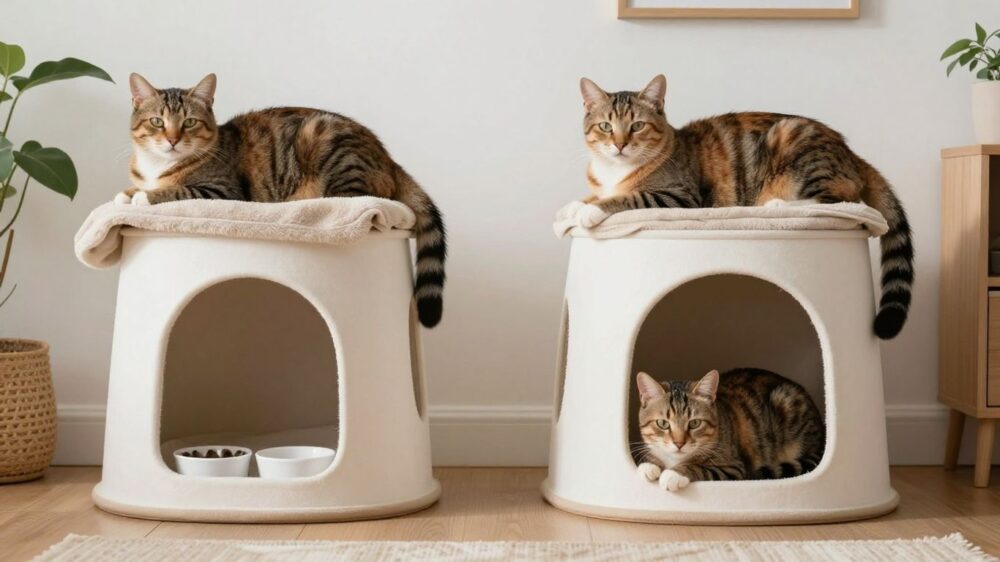
Set the stage before the fur starts flying
A peaceful introduction begins before the cats meet. Your resident cat needs reassurance that their territory, routine, and access to essentials are not about to vanish, while the newcomer needs somewhere quiet to land. A little preparation now can spare everyone a dramatic meeting worthy of daytime television.
Create a private safe room for the newcomer
Choose a quiet room where the new cat can settle without being watched by the resident cat. Provide a comfortable bed, hiding places, and something that smells familiar if you have it. Keep the door closed at first, and let the newcomer learn one small area before asking them to process the whole house.
Give each cat separate food, water, litter, and hiding spots
Separate resources reduce the feeling that one cat must defend everything they need. Give both cats their own food and water stations, litter trays, resting places, and hideaways. They may eventually share some spaces, but choice lowers pressure while trust is still under construction.
Check health records and schedule a veterinary visit
Before close contact, check the newcomer’s health records and arrange a veterinary visit when appropriate. You want to understand any existing health concerns and make sure both cats are comfortable enough for the process. If either cat seems unwell, pause the introduction rather than asking them to cope with social stress on top of it.
Reduce stress with familiar scents and steady routines
Keep meals, play, sleep, and quiet time as predictable as possible. Familiar routines tell your resident cat that the household has not been turned upside down, even if there is a mysterious new tenant behind a door. Move calmly around both cats and give each one attention without making a grand production of it.
Start with scent, not face-to-face introductions
Cats gather a surprising amount of information through smell, so scent work lets them investigate without the risk of a stare-down. You are not trying to make them adore each other immediately; you are making the other cat less startling. This is the patient part of introducing cats slowly, and patience is doing most of the heavy lifting.
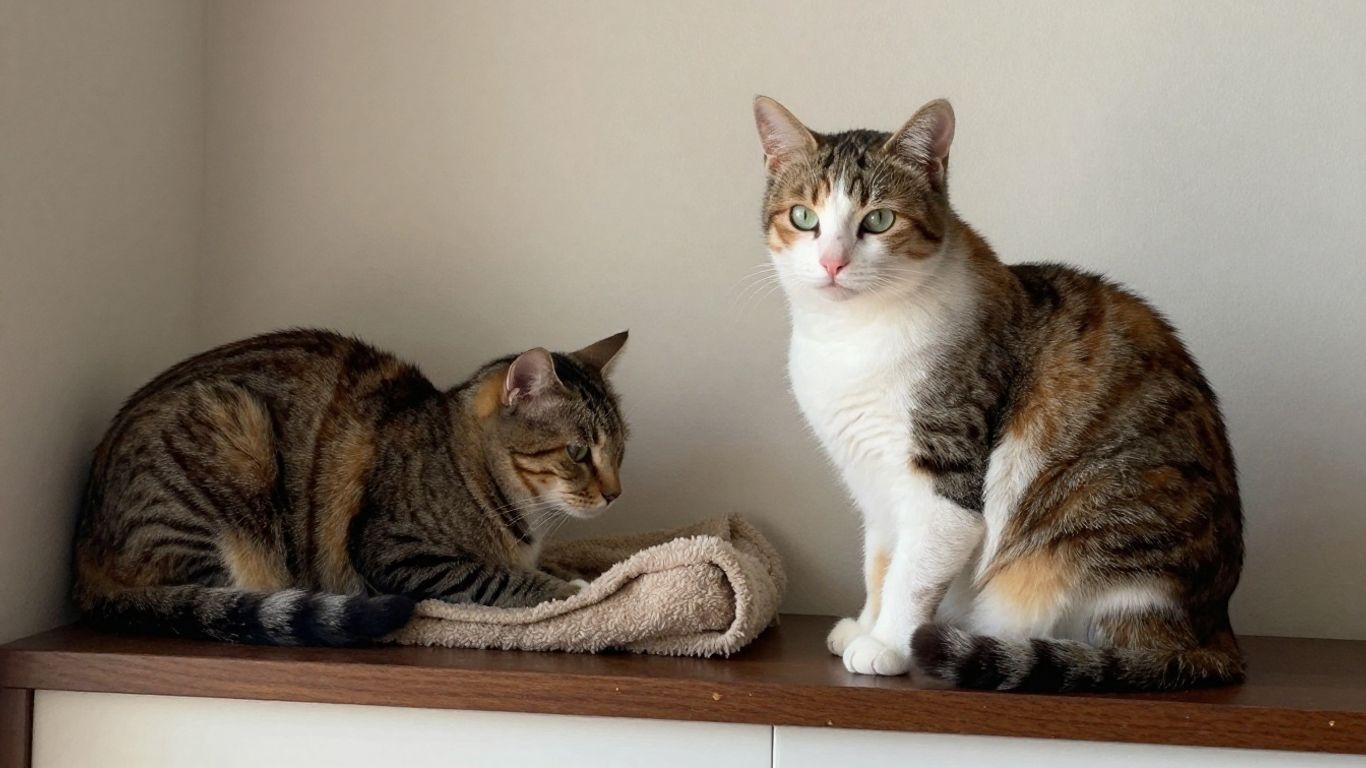
Swap bedding and toys between the cats
Place a blanket, bed cover, or toy carrying one cat’s scent near the other cat’s resting area. Keep the exchange low-key and never push an object into a cat’s face. If either cat reacts strongly, remove it and try again later with a less heavily scented item.
Pair unfamiliar smells with treats and play
Offer a treat, gentle play session, or meal when a cat notices the unfamiliar scent without becoming distressed. The lesson is simple: that smell arrives, and pleasant things follow. Keep rewards ordinary and relaxed, because turning every sniff into a ceremony may make the scent seem suspiciously important.
Let each cat investigate the other’s space
When both cats are coping well with exchanged scents, allow them to explore the other’s area separately. Keep the cats apart while each one investigates, and return them to their own spaces before anyone becomes overwhelmed. This gives them useful information without forcing a direct confrontation.
Know when curiosity is replacing suspicion
Progress can look wonderfully boring. A cat may sniff, pause, eat, play, or wander away instead of hissing at the scent. Those calm, flexible responses suggest the smell is becoming part of the household background, although you should still move gradually rather than treating one good session as a final exam.
Build positive associations through a closed door
A closed door gives both cats a firm boundary while allowing them to hear and smell each other. Use it as a place where good things happen, not as a stage for prolonged complaining. Short, manageable sessions are usually more useful than one ambitious attempt that ends with everyone puffed up.
Feed both cats on opposite sides of the door
Place each cat’s food bowl on their own side of the closed door. Start far enough away that both can eat comfortably, then let the routine create a quiet association between the other cat’s presence and mealtime. If either cat refuses food, the bowls are probably too close for now.
Adjust bowl distance based on their reactions
Move the bowls closer only when both cats remain relaxed, eating normally and recovering quickly after hearing movement beyond the door. There is no prize for reaching the doorway first. If staring, growling, or abandoning food appears, increase the distance and give the cats an easier version of the exercise.
Add short play sessions to keep tension low
Play with each cat on their own side of the door, especially before or after a food session. A wand toy or familiar game can help release nervous energy and keep the interaction from becoming a silent competition. Finish while both cats are still coping well, not when the toy has become a tiny furry referee.
Recognize signs that the process is moving too fast
Repeated growling, intense scratching at the door, refusal to eat, hiding for long periods, or escalating agitation means you should slow down. These reactions are information, not bad behaviour deserving punishment. Return to a quieter step and give both cats time to settle before trying again.
Let the cats see each other safely
Once scent and closed-door work are reasonably calm, add sight without removing the safety barrier. A visual glimpse can feel much bigger to a cat than it does to you, so keep the first sessions controlled. Your aim is calm observation, not a cinematic moment of instant friendship.
Use a baby gate, screen, or cracked door
Choose a barrier that prevents contact while allowing brief views. A baby gate, secure screen, or carefully managed cracked door can work, provided neither cat can squeeze through or reach the other. Stay close enough to end the session before excitement turns into a wrestling invitation.
Keep visual sessions brief and rewarding
Let the cats see each other for a short period, then offer food, treats, or play while they remain composed. Several easy sessions are more useful than one long stare. Gradually extend the time only when both cats can look away, move normally, and return to their ordinary activities.
Watch ears, tails, posture, and vocalizations
Look at the whole cat rather than treating one hiss as the complete story. Flattened ears, a rigid body, a lashing tail, fixed staring, and escalating vocalisations suggest rising pressure. Softer posture, normal movement, brief glances, and the ability to disengage are more encouraging signs.
End on a calm moment instead of waiting for chaos
Close the barrier or guide the cats back to their separate spaces while things are still going well. A quiet ending helps preserve the feeling that seeing the other cat is manageable. If you wait for a blow-up, both cats may remember the session for all the wrong reasons.
Try supervised meetings when the timing is right
Direct meetings should happen only after both cats can handle the earlier stages without sustained distress. Set up the room before opening a door, and keep your expectations modest. The first meeting is not a referendum on their future; it is simply another small piece of information.
Choose a neutral, uncluttered room
Use a room with enough space for both cats to move away from each other. Remove fragile objects and block dangerous hiding gaps, while leaving safe retreat options available. A clear layout makes it easier for you to observe body language and prevents a startled cat from becoming trapped.
Use toys and treats to redirect attention
Keep familiar toys and small food rewards ready, but do not wave them between the cats as if you are hosting a miniature game show. Reward calm glances, relaxed movement, and choosing to disengage. If one cat becomes fixated, gently redirect them before the other cat feels hunted.
Keep the first interactions short
Allow only a brief meeting at first, then separate the cats while the interaction remains uneventful. Repeat these meetings when both cats are rested and receptive. The right pace may feel almost comically slow, but boring progress is exactly what you want.
Separate the cats calmly if tension rises
If bodies stiffen, staring intensifies, or chasing begins, place a visual barrier between the cats rather than grabbing at them. Use a cushion, piece of cardboard, or nearby door to interrupt sight lines, then guide each cat back to their own space. Speak quietly and avoid scolding, which can add fear to an already tense moment.
Expand shared time without declaring victory too soon
A few calm meetings do not mean the introduction is complete. Cats can behave beautifully for ten minutes and then object strongly to sharing a hallway, sofa, or human lap. Build shared time in small increments and keep the separate safe spaces available for as long as either cat needs them.
Increase interaction length in small increments
Add time gradually when both cats can move, eat, play, and disengage without trouble. Change only one thing at a time, such as meeting length or room size, so you can tell what the cats are actually handling. If the mood deteriorates, step back to the last stage that felt easy.
Provide escape routes and vertical territory
Give each cat more than one way to leave a room, along with secure elevated places such as a cat tree or sturdy shelf. Height can help a cat observe without walking straight through another cat’s personal space. Never rely on a single narrow exit, especially during early shared sessions.
Prevent competition around food and litter boxes
Spread important resources around the home rather than placing everything in one busy zone. Feed cats separately if meals create tension, and make sure one cat cannot easily block access to a litter tray. Reducing bottlenecks makes peaceful behaviour much easier for both cats.
Avoid unsupervised time until both cats are reliably calm
Wait until the cats consistently share space without stalking, cornering, repeated swatting, or frantic escapes. Continue supervising even after the first friendly nap, because comfort needs to be a pattern rather than a lucky afternoon. When you finally leave them alone, begin with a short absence and keep their retreat areas open.
Troubleshoot hissing, chasing, and actual cat drama
Some noise is normal during introductions, but repeated fear or aggression deserves attention. Hissing can mean “give me space” rather than “I am plotting your downfall”, while chasing can range from mutual play to a frightening pursuit. Your job is to read the pattern, protect both cats, and adjust the plan without taking the setback personally.
Tell normal boundary-setting from dangerous aggression
A brief hiss, warning swat, or retreat can be ordinary communication when the other cat backs off. More concerning signs include relentless pursuit, cornering, biting, fur flying, injuries, or one cat being unable to access food, water, litter, or rest. When the interaction looks one-sided or fear remains high, separate the cats and slow the process.
Handle staring, stalking, swatting, and ambushing
Interrupt fixation early by placing distance or a visual barrier between the cats. Redirect with a toy only when it genuinely shifts attention; do not use play to lure a frightened cat closer to the other one. Rework the environment too, removing ambush points and adding routes that let each cat leave without passing directly through the other’s path.
Reset the introduction after a serious setback
After a fight or frightening chase, return to complete separation until both cats are relaxed again. Restart with scent exchanges, then closed-door meals, visual contact, and supervised meetings as needed. A setback is not proof that they will never coexist; it is a sign that the last step asked for too much.
Know when to involve a veterinarian or behaviorist
Seek professional help if either cat is injured, stops eating, develops persistent toileting changes, or remains highly distressed. A veterinarian can assess health concerns, while a qualified behaviourist can help you understand the interaction and redesign the introduction. Getting help early is sensible, not an admission that your cats have defeated you.
Conclusion
Introducing cats slowly gives both animals room to feel safe, gather information, and build a new routine without being pushed into instant intimacy. Prepare separate resources, begin with scent, use barriers, watch body language, and move forward only when calm behaviour is becoming ordinary. Some cats become companions, while others simply learn to share a home politely; either outcome can be a perfectly respectable success.
Frequently Asked Questions
How long does it take to introduce two cats?
There is no reliable universal timetable. Some cats adjust within days, while others need weeks or longer; let relaxed behaviour, not the calendar, determine when you move forward.
Should I let cats fight to establish dominance?
No. Fighting can cause injury and make future contact more frightening. Separate them safely, allow both cats to settle, and return to an earlier introduction stage.
Is hissing always a bad sign?
Not necessarily. A brief hiss can be a warning to create distance, but repeated hissing alongside stiff posture, chasing, cornering, or fear means the interaction is too intense.
Should the new cat stay in one room at first?
A private room gives the newcomer a manageable starting point and protects the resident cat from sudden intrusion. Expand access gradually as the newcomer settles and the introduction progresses.
What should I do if one cat will not eat near the door?
Move the food farther away until the cat can eat comfortably. Increase closeness in small steps only when both cats remain relaxed and interested in their meals.
Can cats become friends after a rough first meeting?
Yes, a poor meeting does not always decide the future. Separate them, wait for calm, and restart with scent and barrier work before attempting another supervised interaction.
When can I leave the cats alone together?
Wait until they have repeatedly shared space calmly, with no stalking, cornering, serious chasing, or resource blocking. Begin with short absences and keep separate retreat areas available.